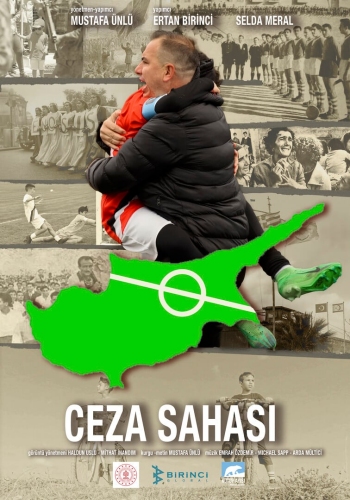
Yapım Tarihi - 2026
Süre - 01:27:43
Format - Uzun Belgesel, Renkli, Türkçe
Yönetmen / Director - Mustafa Ünlü
Senarist / Writer - Mustafa Ünlü
Yapımcı / Producer - Mustafa Ünlü, Ertan Birinci, Selda Meral
“Kıbrıs sorunu” hem tarih kitaplarında ve hem de güncel haber bültenlerinde
varlığını sürdürüyor. Adada 1974 yılında yaşanan çatışmalar ateşkesle sona erdi
ama “savaş” kağıt üstünde 51 yıldır devam ediyor. Ceza Sahası belgeseli,
dünyanın tek bölünmüş başkenti Lefkoşa/Nicosia’dan geçen ve adanın iki toplumunu
ayıran Yeşil Hattın kuzeyinde yaşanmakta olan bir öyküyü anlatıyor. Türkiye
dışında hiçbir ülkenin tanımadığı, 1983’ten beri ambargo altında olan Kuzey
Kıbrıs’ta futbol büyük bir tutku. Yaklaşık her 20 kişiden biri lisanslı
futbolcu. Bu futbolculardan üçü Berk, Emir ve Eymen. 12 yaşındalar ve büyük
hayalleri var. Onlardan önceki iki neslinse büyük hayal kırıklıkları… Çünkü
adanın kuzeyinde yollar Akdeniz, Yeşil hat, çözümsüzlük ve ambargolarla
kesiliyor. İçine kapalı bir ceza sahasında top çevirmekten öteye geçiş yok. Ceza
Sahası bir yandan siyaset üstü bir insan öyküsü anlatırken bir yandan da
çocukların içine doğduğu cezanın geçmişine, nedenlerine pencere açıyor.
The Cyprus issue remains unresolved - etched both in history books and in
today’s headlines. Although the fighting on the island ended with a ceasefire in
1974, the conflict has continued on paper for 51 years.
Penalty Area unfolds north of the Green Line - the UN buffer zone that separates
the island’s two communities and cuts through Nicosia, the world’s last divided
capital. Since 1983, Northern Cyprus has lived under international embargo and
diplomatic isolation, recognized only by Turkey.
In this isolated geography, football is more than a sport - it is a lifeline.
Nearly one in every twenty people is a licensed footballer.
Among them are three twelve-year-olds - Berk, Emir, and Eymen. They dream of
stadium lights, international matches, and a world beyond the island’s invisible
walls. But the two generations before them carry a history of broken hopes.
In the north, roads do not simply lead elsewhere. They end at the Mediterranean,
at checkpoints along the Green Line, at political deadlock and embargo. Movement
is restricted, opportunities are limited, and recognition is denied.
For these children, the only open space seems to be a football pitch - yet even
that feels like a closed penalty area.
While Penalty Area tells a deeply human story that transcends politics, it also
opens a window onto the historical forces that shaped this isolation - and the
inherited punishment into which a new generation has been born.